
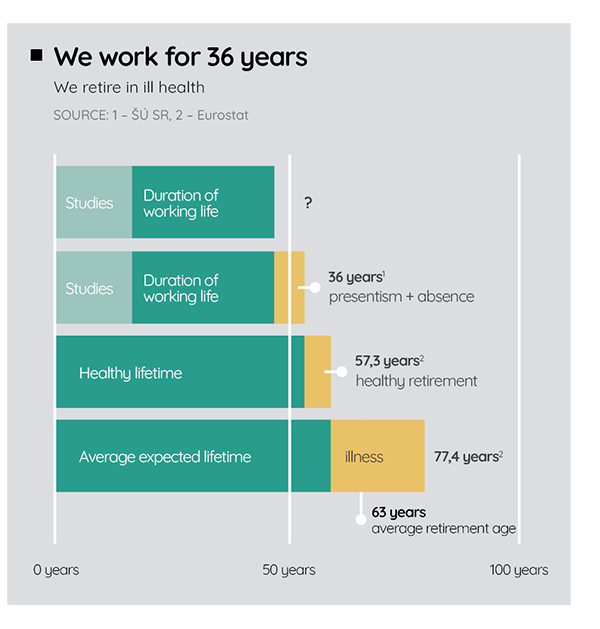
The average life expectancy in Slovakia is 77.4 years. The EU average is 81 years, meaning Slovakia lags behind by almost four years1.
But an even more telling comparison is the number of years people spend in good health. Slovaks work for an average of 36 years2, while healthy life expectancy is just 57.3 years3. With people retiring at around 634, this leaves roughly 14 years of life after retirement – years that are too often affected by illness rather than enjoyed as active, healthy years.
Demographic pressures are adding to the challenge. Over the next decade, today’s large cohorts of people in their 40s and 50s will move into the age groups where health problems become increasingly common5. For companies, this means employee health can no longer be seen simply as an individual concern. It is becoming a workforce-wide issue, and it will affect a growing share of employees at the same time.
The health care system is under pressure
The healthcare system alone cannot keep pace with these demographic and health challenges. Prevention accounts for just 1.5% of the healthcare budget, while primary care is already facing significant capacity constraints. In 2022, Slovakia had a shortage of 400 general practitioners and 223 pediatricians6. As a result, more responsibility for prevention needs to extend beyond the healthcare system, with individuals and employers both playing a greater role in helping people stay healthy.
Can we take charge of our health?
Data shows that our health is shaped by a combination of factors: individual behavior accounts for 35%, genetics and biology for 26%, and socioeconomic factors for 22%7, while healthcare and the environment play a smaller role. Of these factors, individual behavior is where we have the greatest opportunity to make a difference. It is worth considering what medical care can – and cannot – achieve. Without proactive attention to our health, age-related diseases typically begin to emerge around the age of 64. By the time medical intervention is needed, it may already be too late to fully reverse them. In other words, medicine can help us live longer, but it cannot, on its own, ensure that we live those extra years in good health.
According to OECD data, the main risk factors affecting population health in Slovakia include tobacco use, high blood sugar, overweight and obesity, poor diet, high blood pressure, and high cholesterol.
The good news is that many of these risk factors are within our control. Individuals can monitor and influence them through regular preventive check-ups, tracking BMI, or using smartwatches and other tools that provide real-time feedback on physical activity, sleep, and heart rate. Yet, an important question remains: Who will help employees make the most of these tools and support them in turning healthy habits into a long-term part of their lives? The answer lies in the workplace.
Employers can make a difference
Companies are gaining access to more and more data on employee health: from internal HR reporting and benefits platforms to partnerships with healthcare and wellbeing providers. This data enables them to make informed decisions based on evidence rather than assumptions. If, for example, a particular team experiences a rise in musculoskeletal problems, the company can respond with targeted measures, from adapting the workplace and providing access to physiotherapy to training employees in proper posture and ergonomics.
Practical measures can range from equipping HR teams and managers with the knowledge to address health-related issues, to bringing health initiatives into the workplace through screenings and health days. Ongoing health education and long-term programs supporting both physical and mental wellbeing can then help turn these initiatives into lasting habits.
The benefits extend well beyond employee wellbeing. A healthier workforce means fewer absences, higher productivity, and greater team stability, helping companies reduce the long-term costs of sick leave, employee turnover, and lost productivity.
The numbers tell the story
Without a proactive approach to health, both at an individual and organizational level, the costs of ill health, absenteeism, and declining productivity will continue to rise. Companies that take a systematic, data-driven approach to employee health can turn this challenge into a competitive advantage by building a healthier, more resilient, and productive workforce for the long term.
1. Eurostat
2. Statistical Office of the Slovak Republic
3. Eurostat
4. Statistical Office of the Slovak Republic
5. Statistical Office of the Slovak Republic projections for 2019–2034
6. State of Health, OECD
7. Health Data, Minister of Health Think Tank
Martin Pospíšil, CEO, uLekára.sk
Follow us