
What do you currently perceive as the biggest challenge or the biggest opportunity in your life?
(MS) Professionally, I see the biggest opportunity in moving security services beyond a model built mainly on manpower. People remain the foundation, but at selected sites we are also working with video analytics, remote monitoring and AI. The difficult part is not buying technology; it is setting it up so that an operator can trust it during a real incident. Privately, my challenge is much simpler to describe - switching off. Work can easily follow me home, and I must make a conscious effort to give my family the same attention I give to a difficult project.
(ES) The biggest opportunity we are facing as a company right now is adapting to artificial intelligence. AI is fundamentally changing the way we work, so naturally it brings both opportunities and threats. For me, the challenge - and at the same time the excitement - is making sure we properly adopt AI inside Ective while also incorporating it into the services we provide to our customers. We have been working with business processes and automation for many years, and AI is adding a completely new dimension to what is possible.
What achievement from the past 12 months are you proud of the most?
(MS) In the past year, I am most proud of what we did with our security division. Rebuilding it took a lot from the whole team, but the division now runs better and has room to grow, in size and in what we can actually deliver. The bigger change is in how our managers think. They look at a client’s operation as a whole and connect physical security with monitoring, escalation procedures and technology, instead of treating them as three separate services. A project can look excellent on paper, but its real quality is proven in day-to-day operation.  (ES) I am particularly proud of the way we continue to grow as a company while staying independent and building the business without investors. For me, growth is important, but the way we grow matters just as much. We have been able to protect our values, keep our culture, and still enjoy the journey. I am proud that we have built a company that I genuinely enjoy working for, and that many other people enjoy being part of as well. I am also proud that we increasingly apply to ourselves the same principles and technologies that we offer to our customers. We have become a very structured and data-driven organization, and AI is now adding another layer of decision-making, problem-solving and efficiency. There is also a tangible business result behind that progress. During the first eight months of this year, we already reached approximately the revenue level of the entire previous year. For me, this is a good confirmation that it is possible to grow, remain independent, protect your values and still enjoy what you are building.
What is the favorite part of your day and why?
(MS) My favorite part of the day is the evening, when the phone finally becomes quieter and I can be with my family. Dinner and an ordinary conversation are often enough to clear my head.
(ES) I actually do not have one favorite part of the day. Instead, I have a favorite activity for almost every part of it. Mornings are my focus time. I usually keep notifications off, avoid meetings and dedicate that time to larger or more difficult tasks that require concentration. Afternoons are more social - usually starting with a coffee or matcha and then continuing with internal meetings or conversations with customers. When possible, I also like replacing lunch with a workout, usually street workout. After work, my favorite time is spent with my son and family, or doing sports such as padel or cycling. The evening is then about slowing down and preparing for sleep. And I probably should not underestimate dinner either. I usually skip breakfast and often have a very light lunch, so dinner is definitely my favorite meal of the day. So rather than having one favorite part of the day, I try to have something I enjoy in every part of it.
What regular habit or routine has had the biggest positive impact on your life?
(MS) Regular physical training. In the Armed Forces and later in the Military Police, fitness was simply part of the job; today, it is a personal responsibility. At irregular intervals, but usually a few times a month, I also train at the shooting range. Working with firearms is a perishable skill: it is not enough to stay fit in the gym; you also need to remain safe, accurate and composed when handling a weapon. You never know when you may need that skill.
(ES) Meditation. I have experimented with many different habits, including various forms of exercise, but today I would say meditation has had the biggest impact on my life. It improves my ability to focus and concentrate, but it also contributes to my overall well-being, gratitude and happiness. It gives me space to understand things better and to process what is happening around me. I see it as a form of hygiene for the brain.
What advice would you give to your 20-something-year old self?
(MS) I became a platoon leader in Kežmarok at 19. Looking back, I was usually the one rushing in where angels fear to tread. Part of that I would keep, I would even tell that young man to be more ambitious, and not only at work. What I would change is what sat underneath the confidence. After deployments I understood that staying calm in a difficult situation comes from preparation, not from deciding that morning to be brave. The one thing I would not change is my decision to learn languages. I started early and have never regretted it.
(ES) Overall, I am very happy with the journey I have had since my twenties, so I would not make any dramatic changes. The first thing I would tell myself is simply: keep going and do not give up. But I would also remind myself to regularly check in with myself: How do I actually feel? Am I being authentic? Am I happy with what I am doing? Ambition and persistence are important, but so is making sure that the direction you are moving in still feels right for you.  What are the parts of your work that still excite you and give you motivation?
(MS) What still excites me is work that starts with a blank sheet. It might be a new security concept, a realistic crisis exercise for client employees or an escalation process for a monitoring center that looks simple until you test it. I enjoy bringing together people from operations and technical specialists and then seeing whether the solution actually works. I also draw energy from colleagues who take ownership and don’t wait for someone to guide them through every step.
(ES) I sometimes joke that when I grow up, I will join the R&D team at Ective - but there is actually quite a lot of truth in that. I really enjoy technological advancement, experimenting with new technologies and understanding what they can enable. With the current wave of AI, that part of the job has become particularly exciting. At the same time, I deeply enjoy operations - figuring out how to make Ective more efficient, productive and better organized. The most interesting part for me is probably combining those two worlds - using new technologies to fundamentally improve the way the company operates.
If you had to make a career switch, in what other profession can you imagine yourself?
(MS) Probably education and training, but in a very practical form. Before joining the Military Police and its special intervention unit, I spent almost five years at the military academy in Liptovský Mikuláš, first as a First Sergeant and later as Battalion Sergeant Major. Every experience has value and the academy taught me a great deal, although I sometimes regret not joining the special unit earlier. I was always drawn more strongly to operational deployment and the demanding training behind it - environments where you are forced to think critically, make decisions under pressure and take responsibility for them. If I changed careers, I could imagine passing those lessons on as an instructor.
(ES) I could imagine working with children, especially somewhere around the ages of three to nine. I find that stage of development fascinating. Children are incredibly curious and relatively unbiased in the way they look at the world, and at that age you can have a meaningful impact on how they think, behave and develop. It feels like an area where good work can create a very long-lasting impact on someone’s life.
Can you name three sources you have recently learned from or have inspired you the most?
(MS) The sources are not all formal. I learn mostly from people who have already been through a real incident - colleagues, emergency responders, instructors or clients. Post-incident analyses are another important source because they show where a plan failed once the pressure was real. I also learn a lot from technology demonstrations and discussions with suppliers, although I am less interested in what a system can do in a presentation than in how it behaves at two in the morning, in bad weather, with a tired operator in front of it.
(ES) Two podcasts I listen to regularly are The Diary of a CEO and Modern Wisdom. Both expose me to interesting people, perspectives and subjects that I might otherwise not encounter. Another major source of learning for me today is AI itself. I am genuinely amazed by how much we can learn simply by asking questions, exploring ideas and having a dialogue with an AI system. It has significantly lowered the barrier between curiosity and knowledge. And finally, meditation is another form of learning for me - except that instead of learning about the outside world, it gives me an opportunity to learn about myself, reflect and process all the information I consume.
What is your biggest fear for the generation of today’s children? What about the biggest hope?
(MS) My biggest concern is that children will find it harder to distinguish reliable information from something that only looks convincing. With social media and AI, the volume is growing faster than their ability to judge it. Technology can be a very good servant, but a very bad master. At the same time, when I watch my daughters use foreign languages and technology so naturally, I also see enormous opportunity. I hope their generation keeps that openness without losing patience and real relationships.
(ES) One of my biggest concerns is how children will adapt psychologically to a world built increasingly around instant rewards. They are exposed to vastly more information and stimulation than our generation was - short-form videos, social media, games, instant access to information and now AI systems that can produce almost anything within seconds. I worry about what this will do to their ability to concentrate for long periods of time, think long term and choose a larger future benefit over an immediate reward. I am also genuinely concerned about what their professional future will look like if AI continues advancing rapidly. The job market they enter may be fundamentally different from the one we know today. At the same time, this is also where my biggest hope comes from. Humans are remarkably good at adapting. Every generation learns to operate in a world that is different from the one their parents grew up in. I am excited to see what solutions the next generation will develop, what entirely new skills they will acquire and what opportunities they will discover that we cannot even imagine today.
Marián Soroka, Security Director - CSO, SSI Sk s. r. o.
Eduard Shlepetskyy, Founder and CEO, Ective Automation
Author
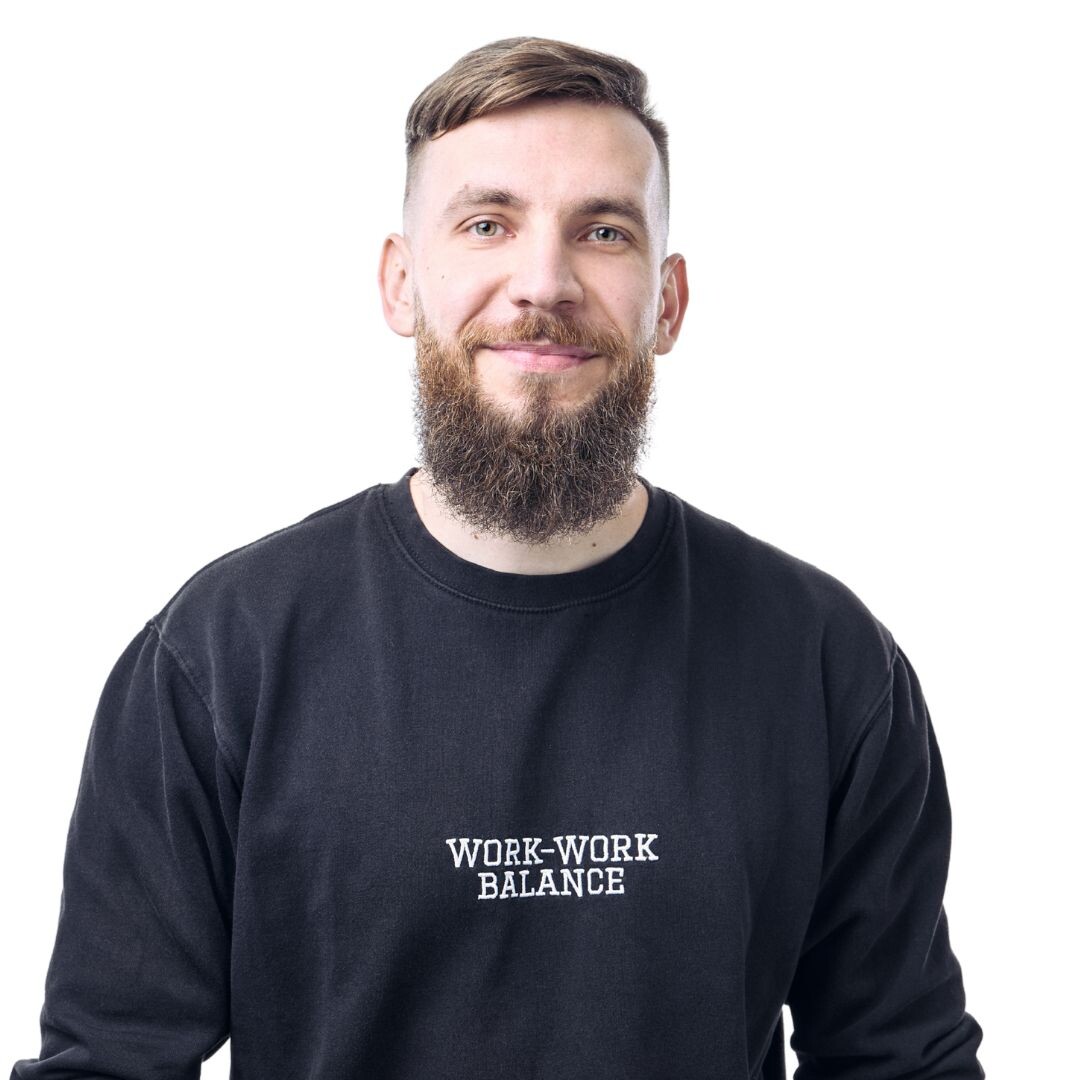
- Eduard Shlepetskyy
- ECTIVE s.r.o.
- CEO
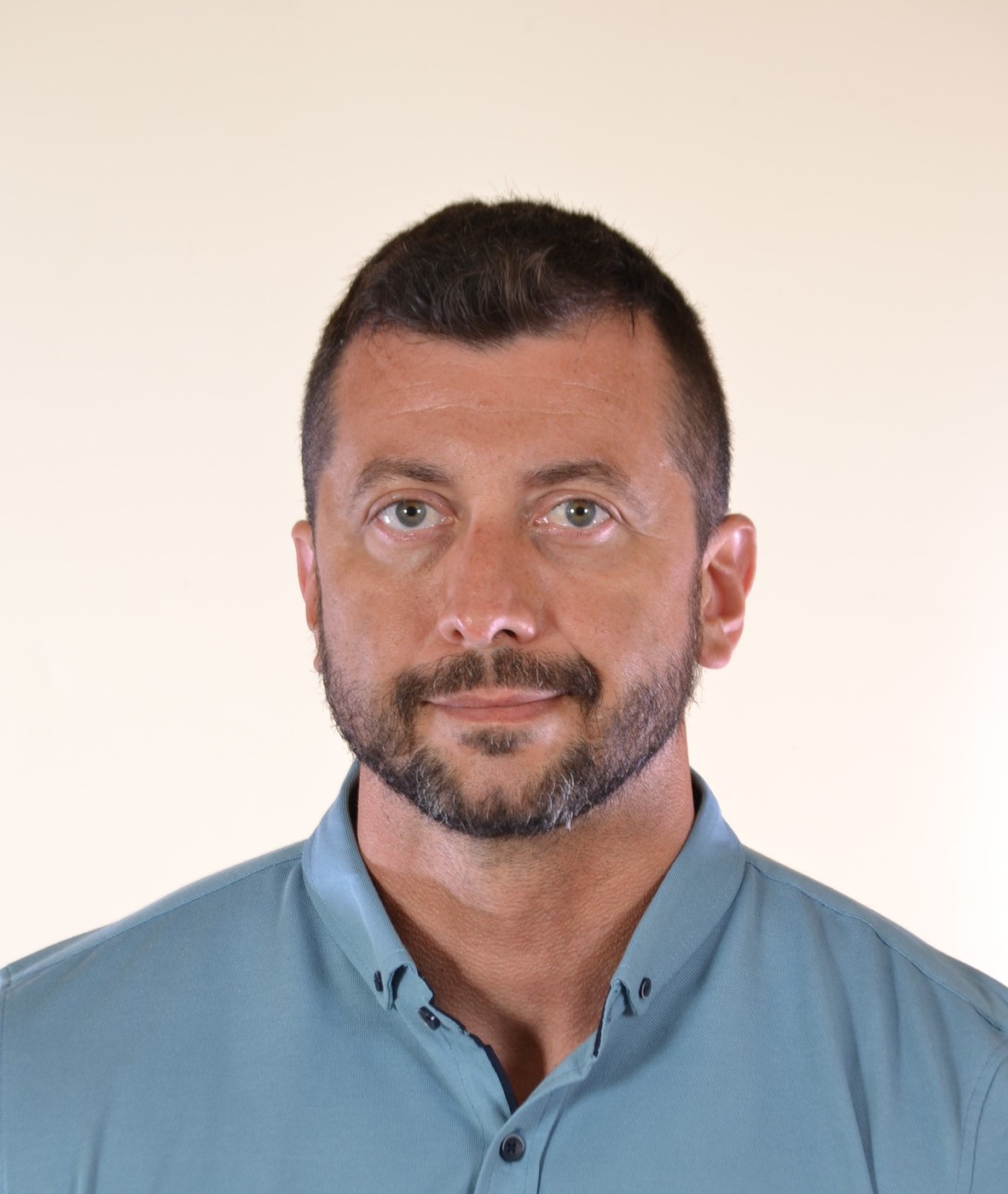
- Marián Soroka
- Special Service International SK s. r. o.
- Security Director
Follow us