
Why poker? Because real life unfolds in conditions of incomplete information, constant uncertainty, and risk.
Von Neumann’s fascination with a game played at the intersection of chance and strategy led to the influential book Theory of Games and Economic Behavior (1944), which laid the foundations of modern economic rationality. In poker, players face unknown cards, read the behavior of others, bluff, learn from failure, and take calculated risks at the right moment. Unlike chess, where every move can theoretically be calculated, the worlds of science, business, and politics resemble poker far more closely: dynamic, uncertain, but open to those willing to play.
A Cultural Challenge for Slovakia
For economic growth in the 21st century, it is no longer enough to merely maintain and incrementally improve existing systems, institutions, or companies. What we need are people willing to “go with the flow of the river”, to explore new paths, accept risk, innovate, and play the poker game of life.
In his book On the Edge, Nate Silver refers to such people as “Riverians.” Their counterparts are the “Village People”, those who prefer stability, clear rules, and predictable moves on the chessboard of life. In a recent discussion with leaders of Slovak industry, the author realized that many managers are rewarded primarily for “playing chess”: maintaining the status quo, minimizing risk, and relying on proven moves. When the EU or the government adjusts taxes, contributions, or energy prices, the system responds. For example, a manufacturing group may allocate production of a new model to Slovakia. Yet when a new idea or discovery emerges, patents and strategic ownership are often registered elsewhere, and cooperation with local innovation ecosystems tends to follow established internal frameworks.
This is not surprising. It reflects how complex international business structures are designed to function. And Slovakia, in many ways, has adapted itself to this logic.
Our education system, bureaucracy, and even industrial ownership structures are largely oriented toward producing reliable “Village People”: individuals who operate systems rather than transform them. We reward predictability more than breakthrough thinking.
A telling detail: according to a recent (non-public) regional survey, only 20% of secondary-school graduates were able to explain what a start-up is.
But the era of cheap labor and passive reliance on foreign investment is coming to an end. Slovakia needs a deep cultural and systemic transformation, or it risks remaining trapped in the middle-income zone: uncompetitive, without its own innovations, and without a clear vision.
Five Principles for a New Economy
What would change look like? Let us imagine five guiding principles.
- Innovation emerges at the edge, not the center - As Silver argues, breakthrough ideas rarely come from the core of the system. They emerge at its edges, from independent researchers, start-ups, and spin-offs. Slovakia needs to actively support edge innovation through flexible funding, academic entrepreneurship, and smarter regulation that opens access to new sectors.
- Risk is not the enemy, R&D&I must be a state priority - “Riverians” take risks, but intelligently. They fail fast and learn faster. Slovakia must significantly increase public investment in research, development, and innovation, while also motivating private capital to engage more strongly in the knowledge economy and the local innovation ecosystem. Equally important is recognizing failure as a natural and necessary stage of learning.
- Trust and informal networks matter more than central structures - Successful innovation ecosystems are built on trust and collaboration. Slovakia needs more community co-working spaces, hackerspaces, and student incubators, and, above all, stronger links between academics, developers, entrepreneurs, and designers.
- Mindset matters more than job titles - Being “at the edge” is not about what someone does, but how they think. Openness, creativity, and the courage to experiment define the edge mindset. These qualities can and should be cultivated early, starting in schools, by valuing original questions, not just correct answers.
- Buying a ticket to the future - There is a well-known joke about a man who prays to win the lottery but never buys a ticket. That, in many ways, is our situation.
We want prosperity but we hesitate to invest in the essentials: education, research, infrastructure, and talent. The Czech Republic has chosen a different path, consistently investing in what might be called “the stairway to prosperity”: quality education, healthcare, social services, and steadily increasing research funding. Slovakia often observes this from a distance.
Less Administration, More Creation
Slovakia still operates, in many respects, as a village economy. But the future belongs to the “Riverians”, those capable of playing the poker game of the modern economy. Not because they have certainty, but because they are not afraid to take risks.
In a world where global power dynamics resemble a high-stakes poker table rather than a predictable chess match, Slovakia cannot afford to remain a passive observer.
We need more than reforms. We need a change in how we think.
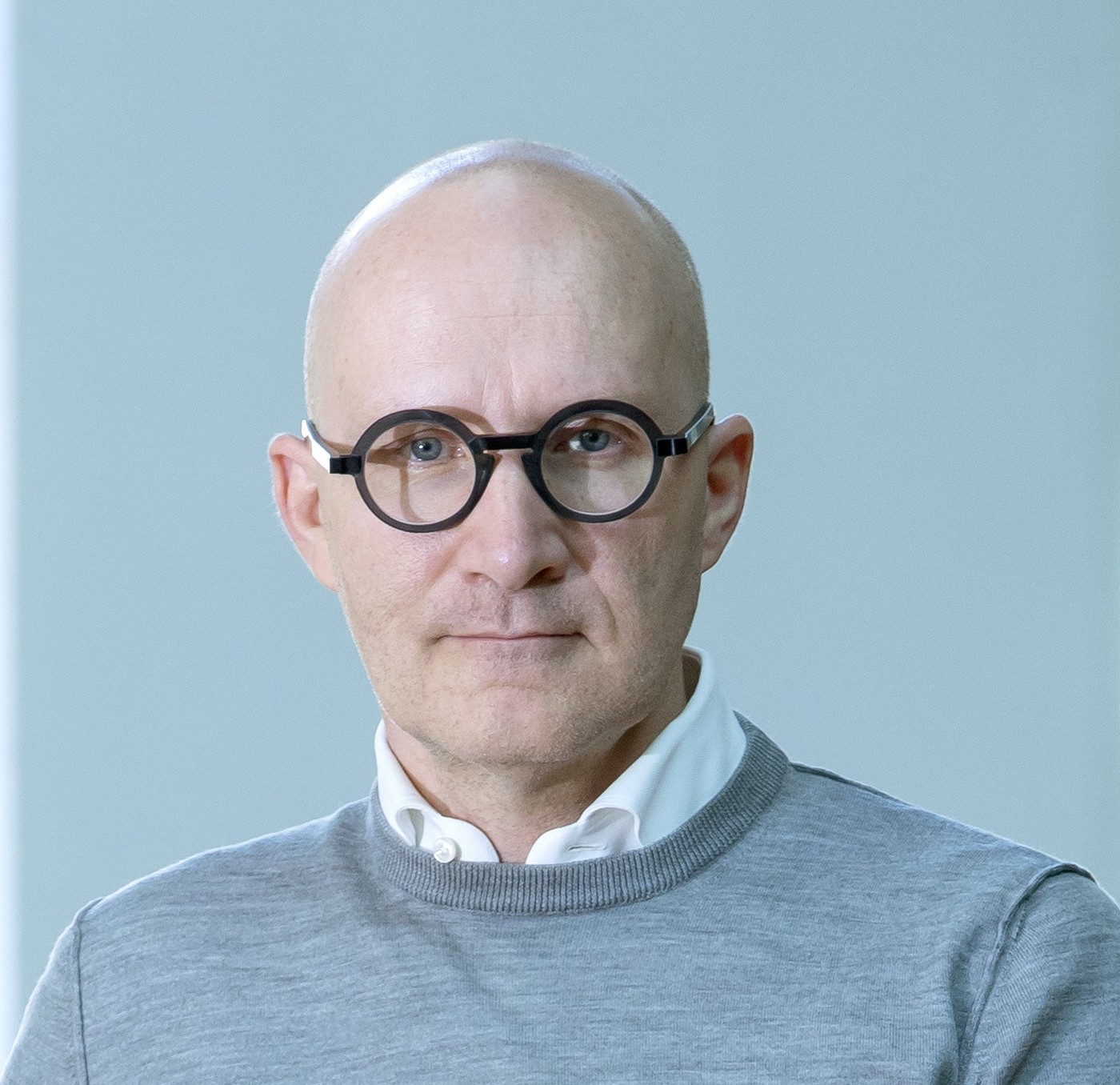
Ronald Blaško, Director of the Priorities Department, VAIA (Research and Innovation Authority)
Author
- Ronald Blaško
- Výskumná a inovačná autorita (VAIA)
- Director of the Priorities Department
Follow us