
What do you currently perceive as the biggest challenge or the biggest opportunity in your life?
(SS) The biggest challenge - and at the same time the biggest opportunity - in my professional life and for our firm is the advent of AI and its impact on the legal profession as a whole. On the one hand, AI offers tremendous opportunities to increase efficiency and improve the quality of outputs. On the other hand, it is clear that its impact on the legal and advisory business will be profound, and those who fall behind or fail to innovate sufficiently will not remain competitive in the future.
That is why, at HAVEL & PARTNERS, we strive to stay ahead, leveraging our position as the largest Czech-Slovak law firm and our capital strength to cultivate an innovation-driven mindset and fully embrace new technologies. Our ambition is not merely to keep pace with the market, but to strengthen our competitive advantage and market position.
For example, several years ago we began building an internal innovation team, which has since evolved into a standalone department. We launched our internal portal, havelpartners.AI, developed our own high-quality AI tool for legal research, and adopted leading international legal information systems, such as Legora, among many other initiatives. Not coincidentally, in 2025, we were named the most innovative law firm in the Czech Republic at the Law Firm of the Year awards.
(RP) I see one of the biggest opportunities in helping transform areas such as accounting and payroll into smarter, more digital, and more value-driven services. The rise of AI is accelerating this shift even further. It is changing not only how we work, but also what clients expect from us. I find that very exciting, because it creates room to move from routine execution to more meaningful advisory, better insights, and better decision-making.
At the same time, the real challenge is to make sure that technology remains a tool, not the purpose. In areas like accounting and payroll, trust, quality, and the human element still matter enormously. For me, the opportunity is therefore not just about introducing new tools, but about using digitalization and AI in a way that genuinely improves how people work and how clients experience our services.
On the private side, the challenge is to stay truly present for my family, especially for my chil-dren, while working in an environment that is fast, demanding, and constantly evolving. As a parent, I feel that time and attention matter more than ever. One of the biggest personal opportunities for me is therefore not only to build and lead professionally, but also to be a good example for my children — to show them that ambition, responsibility, and curiosity can go hand in hand with family, values, and being truly present in everyday life.
What achievement from the past 12 months are you proud of the most?
(SS) I am proud that even after 25 years, our law firm has not become overly corporate or complacent. Instead of resting on our laurels, this year we launched the largest innovation initiative in our firm’s twenty-five-year history - the TIGER project - into which we decided to invest significant time and financial resources.
TIGER is a strategic initiative designed to ensure that the HAVEL & PARTNERS group remains a dynamic, forward-looking organization with an even more efficient, technologically advanced, and systematic approach to management and service delivery. It is not merely about optimization; it is about setting a new trajectory for how we serve our clients, develop our business, and support our people’s growth.
(RP) What I am most proud of is being part of LeitnerLeitner’s story in Slovakia — a firm that has been successfully active in tax advisory, audit, accounting, and payroll for more than 30 years. That long-standing presence gives our work a very concrete meaning. These are areas that form the backbone of how companies operate, and when they work well, everything else becomes easier, more reliable, and more effective.
Over the past 12 months, we have focused in particular on solutions that make payroll processes more efficient and more user-friendly in everyday practice. A good example is annual tax reconciliation, where we have been developing tools that help simplify administration and make the overall process smoother for both clients and our internal teams. At the same time, we have also been expanding HR-related modules in areas such as recreational vouchers and child sports activity contributions, reflecting the growing expectation that payroll services should also offer practical employee-facing solutions.
What I value especially is that this progress is supported by long-standing international cooperation in payroll, combined with strong local expertise. LeitnerLeitner is a proud local partner of ADP in the area of payroll processing in Slovakia, which I see as an important part of the stability, know-how, and international perspective we bring to this field. That combination allows us to move forward in a way that is both innovative and reliable, and seeing this progress take shape in practice is probably what gives me the strongest sense of pride.
What is the favorite part of your day and why?
(SS) I do not think I have a single favorite part of the day. I enjoy the intensity of the mornings, filled with meetings and client communication - the adrenaline that comes from juggling multiple tasks, and the satisfaction of seeing focused effort translate into excellent client service.
Equally enjoyable are the evenings, which unfold at the opposite pace. That is when I can slow down, spend time with my family, reconnect after a demanding day, and talk about what happened at work and at school. Ideally, I even get to cook dinner - on weekdays, perhaps a quick but authentically Italian pasta, such as cacio e pepe or carbonara. Cooking, in general, helps me completely switch off and disconnect from work.
(RP) My favorite part of the day is the early morning. I value that moment of quiet before the day becomes fully occupied by calls, decisions, and the many operational topics that naturally come with my work.
It is the part of the day when I can think most clearly, structure my priorities, and create a sense of direction before everything speeds up. I have come to appreciate how important those calm-er moments are, not only for work, but also for keeping balance and perspective.
That is also why I value Sunday evenings in a similar way. When the house becomes quiet and the week is still ahead, I like to sit down and think through the key milestones and priorities for the coming days. It gives me clarity, and in many ways it creates the bridge between a calm Sun-day evening and a focused Monday morning.
What regular habit or routine has had the biggest positive impact on your life?
(SS) Among my habits, I would highlight regular evening and weekend reading. I try not to read only - or too much - fiction, and when I do, I prefer to read it in the original language to keep my language skills sharp. More often, however, I read legal and management literature or non-fiction to broaden my horizons.
I believe this habit is one of the factors that continually pushes me forward, both in understanding our clients and the environment in which they operate, as well as in managing our law firm.
Beyond habits, values are equally important - particularly discipline, humility, and courage. I consciously remind myself of these values, as they help me navigate everyday challenges as well as major decisions. In my view, they are precisely what distinguishes the very best from the rest.  (RP) For me, it is having structure in the day, even during the busiest periods. It may not sound like anything extraordinary, but over time I have learned how much planning, prioritizing, and a cer-tain level of discipline in managing time can influence both performance and peace of mind.
In both work and private life, it is very easy to let urgency take over everything. Having a basic structure helps me focus on what really matters instead of constantly reacting to what comes first. Looking back, that habit has probably had the biggest positive impact on both my effec-tiveness and my overall balance.
What advice would you give to your 20-something-year old self?
(SS) If I were twenty today, I might say: do not go to law school. In fact, that is the advice I recently gave my nineteen-year-old sister. I say this partly tongue-in-cheek, but if I were choosing law today, it would be a much more difficult decision than it was twenty years ago.
Technology will fundamentally reshape legal business and junior lawyers, in particular, will face a much tougher path to breaking through and building successful careers. That said, I firmly believe that the very best will, as always, find ways to succeed and make the most of the right opportunities.
(RP) I would tell my younger self to be patient and think long-term. Early in your career, there is often a strong need to prove yourself quickly, but over time I have learned that real progress is usually built more on consistency, trust, and continuous learning than on speed alone.
I would also say: stay curious and do not be afraid of responsibility. Some of the most important growth comes from moments when you are slightly outside your comfort zone. And finally, I would remind myself that building strong relationships and a good reputation matters just as much as building expertise.
What are the parts of your work that still excite you and give you motivation?
(SS) What I enjoy most is the diversity of cases and the opportunity to work with outstanding and exceptionally smart entrepreneurs. One of the great things about top-tier legal practice is that you meet some of the brightest minds - or at the very least, some of the most successful individuals - from whom you can learn, draw inspiration, and gain deeper insight into their businesses.
When this is combined with intellectually stimulating work - from technology law to complex cross-border transactions - it is impossible not to find the work fulfilling and motivating.
(RP) What still excites me most is when our expertise translates into real, tangible value for clients. At LeitnerLeitner, I see every day how much well-designed processes, reliable support functions, and good decisions matter for the way companies operate. When these things work well, every-thing else becomes easier, more reliable, and more efficient.
I find it especially rewarding when we help solve a problem, improve a process, or make an im-portant part of a client’s business work more smoothly and reliably. If our work allows clients to spend less time dealing with operational complexity and more time focusing on their core busi-ness, that remains a strong source of motivation for me.
That is particularly true in payroll and accounting. These areas are often perceived as routine or purely administrative, but in reality they are fundamental to how companies function. When you improve them, you improve reliability, efficiency, decision-making, and often also the eve-ryday experience of employees and clients.
I also find it motivating that these services are evolving so quickly. The combination of expertise, technology, and innovation, including the growing role of AI, creates real space to rethink tradi-tional ways of working and turn them into something smarter and more valuable.
If you had to make a career switch, in what other profession can you imagine yourself?
(SS) A chef. No - on second thought, that would probably take the joy out of cooking, turning it into an obligation rather than a pleasure.
If I were to make a real change, I could imagine joining my wife in her family business and pursuing opportunities in commerce.
(RP) If I had to make a career switch, I could very naturally imagine myself returning to tennis. As a junior, I was a national team player, and tennis is something I still follow with great interest to-day. It is one of those parts of life that has stayed with me over time, so it would probably be the most natural alternative path.
I could see myself either coaching or taking on a meaningful role within Slovak tennis, ideally in a way that would allow me to support and develop the younger generation. What has always at-tracted me to tennis is the combination of discipline, focus, resilience, and continuous self-improvement. In many ways, those are values that also translate well into business and every-day life. Can you name three sources you have recently learned from or have inspired you the most?
(SS) One of the most inspiring experiences of the past year was attending the annual AIJA Congress in Washington, D.C., where lawyers from around the world gathered to share perspectives on the future of our profession, particularly in relation to artificial intelligence and the development of young talent.
In terms of books, I have recently enjoyed The Diary of a CEO by Steven Bartlett and Zero to One by Peter Thiel. There are countless podcasts worth mentioning, but too many to list here. Last but not least, I continuously learn from our clients; their entrepreneurial spirit and experience constantly push me to view challenges from new angles.
(RP) Recently, I have been drawing inspiration mainly from three areas. The first is everyday interac-tion with clients, colleagues, and people from different parts of business. Real conversations often bring the most useful ideas, because they reflect practical experience rather than theory.
The second is following legislative and regulatory developments. In our profession, that is natu-rally part of daily life, but it is also one of the main ways I keep learning, because it constantly shows how quickly the environment around business is changing and where clients need to adapt most.
The third is content related to finance, investing, and long-term thinking. These are topics I have been interested in for many years, and I tend to return to sources that help me look at decisions with more perspective, discipline, and long-term focus.
What is your biggest fear for the generation of today’s children? What about the biggest hope?
(SS) My concern is that constant digital noise may make it harder for children to concentrate and build genuine relationships. I have already noticed that even some of our junior colleagues struggle considerably with maintaining focus and engaging in deep work.
On the other hand, I sense that the situation may gradually be improving. Recent bans on social media for children under sixteen in various parts of the world, as well as the fact that in my son’s third-grade class no one yet has a mobile phone, give me hope that we are beginning to think more carefully about the appropriate use of technology from an early age.
(RP) My biggest fear is that today’s children will grow up in a world full of speed, distraction, and con-stant comparison, with too little space for patience, depth, and real human connection. With the rapid rise of AI and digital technologies, I think critical thinking will become one of the most im-portant skills of all. The real challenge will no longer be access to information, but the ability to question it, understand it in context, and use it wisely.
At the same time, my biggest hope is that this generation will be more open, adaptable, and globally minded than any generation before it. They are growing up with access to knowledge, technology, and opportunities that previous generations could hardly imagine. If they can com-bine that with strong values, responsibility, and sound judgment, they have every chance to do remarkable things.
Štěpán Štarha, Partner, Havel & Partners
Roman Ponc, Partner, LeitnerLeitner Slovakia
Author
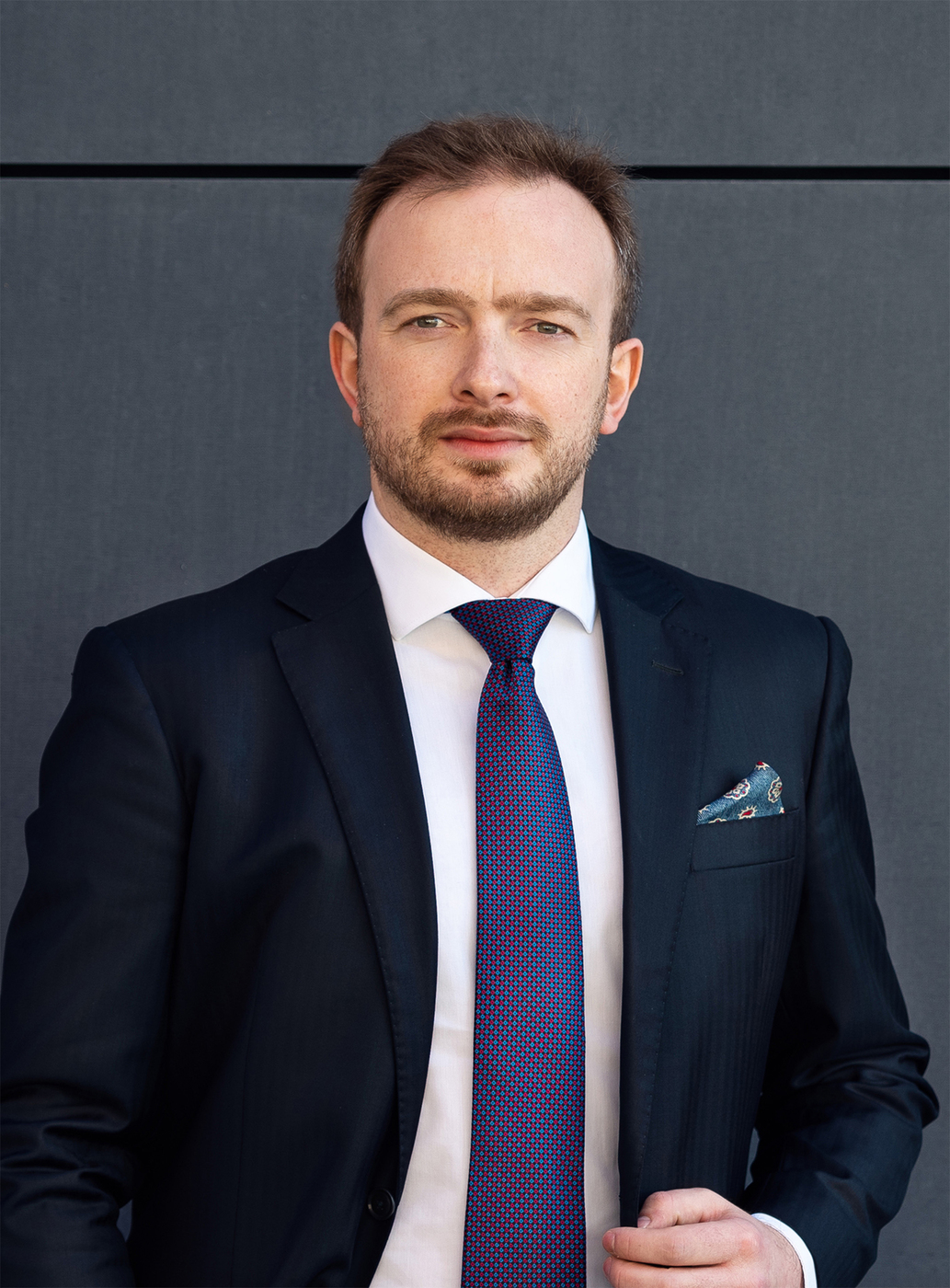
- Štěpán Štarha
- HAVEL & PARTNERS s.r.o.
- Partner

- Roman Ponc
- LeitnerLeitner Tax s.r.o.
- Partner
Follow us