
In Slovakia, where urban centers are compact and the economy depends heavily on high-value services, developing efficient, sustainable and well-connected business districts is strategically important. Bratislava today has approximately 1.7 million square meters of modern office stock, a scale that meaningfully shapes the city’s economic trajectory and its ability to attract investment and talent.
From isolated office towers to integrated districts
For many years, office development in Central Europe relied on standalone buildings along major transport corridors. Although these assets met immediate demand, they contributed little to the surrounding urban fabric. Offices filled during working hours, emptied afterward and adjacent streets often remained inactive. Today, this model is giving way to integrated mixed-use districts combining offices with housing, retail, services and quality public spaces, reflecting a shift toward environments that generate stronger long-term value and support more resilient urban growth.
Bratislava mirrors this evolution. Former industrial sites and underutilized inner-city areas are being reshaped into compact, better-connected districts with improved public spaces, stronger mobility links and higher environmental standards. These regeneration efforts align with European trends prioritizing revitalization of inner-urban areas over outward expansion.
Economic multipliers and urban productivity
Global evidence shows that when businesses cluster within walkable, well-served districts, productivity rises. Research demonstrates that new jobs in knowledge-intensive sectors stimulate additional employment in local services through agglomeration effects. Companies in dense districts benefit from shared infrastructure, specialized suppliers and deeper talent pools, while face-to-face interaction accelerates innovation.
In Bratislava, these dynamics appear in both established and emerging zones. Areas with high concentrations of modern offices show stronger retail and hospitality performance and greater real-estate stability. Architectural ambition reinforces these outcomes. Collaboration with studios such as Stefano Boeri Architetti, Snøhetta and Zaha Hadid Architects helps ensure that new districts contribute to the city’s identity and attractiveness.
Why mixed-use districts outperform solitaires
Mixed-use business districts outperform solitary office buildings because they function as interconnected ecosystems. Public investment in transport, green infrastructure and utilities is more effective when concentrated in cohesive districts. Studies show that mixed-use environments achieve higher long-term value growth and more stable occupancy than mono-functional zones. Continuous activity throughout the day strengthens the service economy and enhances resilience.
For cities like Bratislava, this model supports a more sustainable urban structure by reducing commuting, improving access to daily services and creating environments active beyond working hours—contributing to economic vitality and a more balanced urban life.
Hybrid work and shifting expectations
Hybrid work has reshaped office demand but not diminished the relevance of high-quality business districts. Across Europe, the “flight to quality” remains strong as companies prioritize well-located A-class buildings with modern technology, ESG credentials and excellent transport connections. Bratislava reflects this: while citywide office vacancy is around 14%, vacancy in the Central Business District is typically 6–8%, showing sustained interest. Prime office rents of €20–21 per m² underline the resilience of top-tier space.
The flex-office segment reinforces these dynamics. Flexible workplaces now total roughly 40,000 square meters—double the 2020 volume and 2–2.5% of supply. Demand is strongest in central zones, consistent with global patterns where hybrid work increases the need for adaptable, service-oriented space near mobility hubs and amenities.
ESG, energy efficiency and long-term competitiveness
Sustainability has become a central factor shaping business districts. Buildings in the EU account for roughly 40% of energy consumption and 36% of emissions, making real-estate transformation essential for climate-neutrality goals. District-level development enables more ambitious ESG solutions—shared energy systems, low-carbon heating and cooling, and advanced management technologies—than individual buildings can deliver.
New projects in Bratislava increasingly incorporate these features. Developments targeting LEED Platinum or LEED Zero Carbon standards show measurable benefits, including expected reductions of 43% in electricity use and 59% in CO₂ emissions versus standard office baselines. These improvements enhance environmental performance, reduce operating costs and strengthen long-term asset resilience.
Brownfield regeneration as a strategic priority
Slovakia’s strongest development opportunities lie in well-located brownfield zones with good transport links and existing infrastructure. European cities prioritize brownfield regeneration to reduce pressure on greenfield land, support compact growth and address historic environmental burdens. Bratislava’s transformation of former industrial areas illustrates how underused sites can evolve into productive mixed-use districts.
As European urban policy emphasizes sustainable mobility, dense form and climate resilience, regenerating centrally located brownfields will remain a key driver of competitiveness for Slovakia’s capital.
A strategic platform for Slovakia’s future
Business districts are far more than clusters of office buildings—they are long-term economic platforms supporting innovation, employment and productivity. Their evolution reflects broader changes in how people work, how companies grow and how cities compete for investment. For Slovakia, accelerating sustainable, mixed-use and well-connected business districts is both an urban priority and an economic necessity. With strong ESG foundations, quality architecture and a focus on brownfield regeneration, these districts can reinforce national competitiveness and support a more resilient, future-ready economy.
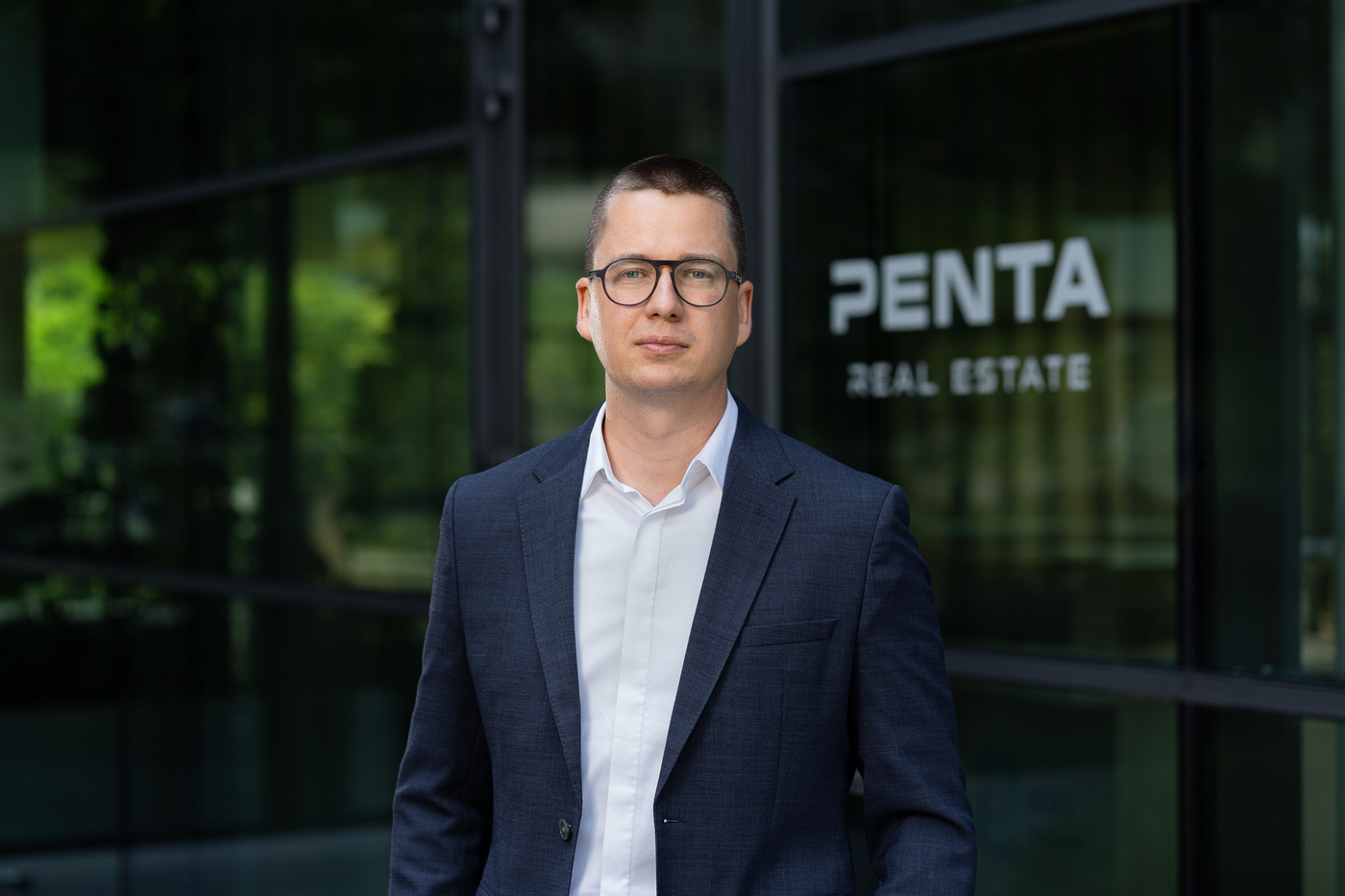
Michal Rehák, Country Managing Director, Penta Real Estate
Follow us