
It is therefore our responsibility to plan the city not only for the present but also for future generations—a future in which Košice remains a place of opportunity, creativity, prosperity, and quality of life.
We live in a period of profound change. The nature of the economy, society, mobility, and the geopolitical order is evolving faster than ever before. Geopolitical tensions, changing security conditions, technological competition among major powers, climate change, and demographic trends will shape the development of European cities for decades to come. In this environment, it is essential that Košice remain firmly anchored within the European Union and its democratic, legal, and values-based framework. Thanks to its geographical location, Košice is already one of the European Union’s most important eastern gateways.
The city’s greatest challenge over the coming decades will be to reverse the long-term outflow of residents and strengthen its attractiveness as a place to live. A city cannot prosper without people. It is not enough to retain young talent; Košice must also attract new residents from across Slovakia and abroad while cultivating its natural cosmopolitan character. Competition among European cities increasingly revolves around quality of life, professional opportunities, housing affordability, education, public spaces, and cultural and recreational offerings. Urban development must therefore focus on creating an attractive environment for all generations. A city of short distances, high-quality public spaces, green areas, safe streets, accessible services, and energy needs met by sustainable sources is not a utopia, but a fundamental prerequisite for competitiveness.
Transport accessibility will be equally important. Košice should become fully integrated into the European network of modern and high-speed rail connections. Reliable regional, national, and international transport links influence where people choose to live, where companies invest, and where students pursue their education. Fast and comfortable rail connections to western Slovakia, the Czech Republic, Poland, Hungary, and, after the end of the war, Ukraine, represent strategic investments in the city’s future. The role of the international airport and the continued development of highway corridors will remain equally significant.
Economic prosperity will increasingly depend on the city’s ability to create skilled employment opportunities and provide access to advanced digital infrastructure. Digital transformation and Industry 4.0 are already reshaping the nature of work. Košice has a unique opportunity to build on its industrial tradition while strengthening its position as a center for information technology, research, creative industries, and innovative high-value-added manufacturing.
Education is central to this transformation. The future of Košice is closely linked to the future of its schools, universities, and research institutions. The Technical University of Košice, Pavol Jozef Šafárik University, the University of Veterinary Medicine and Pharmacy, and other educational institutions are strategic assets that cannot be replaced by investment incentives. The ability to educate talented graduates and retain them in the city will be one of the key indicators of success. Culture will play an equally important role. History shows that the most successful cities are not only economic centers but also hubs of learning, creativity, and social life. The experience of the European Capital of Culture 2013 demonstrated that culture can serve as a catalyst for economic development, neighborhood revitalization, and civic identity. Košice should continue to strengthen its position as an open, tolerant, and creative city with a rich cultural life and an international outlook.
An important milestone in this process is the new master plan approved in 2025. Its significance lies not only in regulating development but also in defining a long-term vision for the city. Its core principles include compact and sustainable growth, protection of natural and landscape values, efficient use of existing infrastructure, support for public transportation, mixed-use urban development, and the creation of high-quality public spaces. The new plan marks a departure from a centuries-old model of extensive urban expansion and creates conditions for more targeted and sustainable growth from the city center outward.
Particularly promising are the transition zones, the revitalization and renaturalization of the Hornád River, and efforts to strengthen connections between the eastern and western parts of the city. Extensive former industrial areas provide a unique opportunity to create entirely new urban districts where people can live, work, study, shop, play sports, and relax without the need to expand into the surrounding countryside. Their transformation must be guided by high-quality urban planning, architectural excellence, environmental sustainability, and social inclusion.
The history of Košice demonstrates a remarkable ability to adapt to changing circumstances without losing its identity. The city has overcome the decline of traditional trade routes, shifts in national borders, wars, economic crises, and major social transformations. Rapid population growth in the postwar period helped absorb profound structural changes and contributed to the city’s development. Today, Košice possesses the critical mass necessary for further growth and renewal, provided that local government actively creates an environment that supports entrepreneurship, innovation, education, culture, and civic engagement. This historical experience gives reason for realistic optimism.
Fifty years from now, when future generations look back on this period, I hope they will see it as a time when Košice successfully prepared for profound change without losing its genius loci. A time when the city found the courage to shape its own future and guide its next transformation. A time when, on the eastern frontier of the EU, Košice continued its development into a confident, modern, and attractive Central European city, a city where people choose to live, work, and build their future.
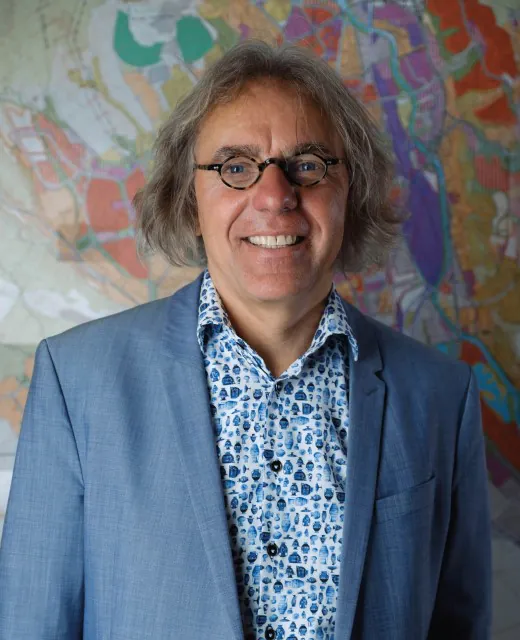
Petr Kropp, Chief Architect of the City of Košice
Follow us