
One reason is the lack of continuity in infrastructure policy. Decisions on technical infrastructure projects should be guided by long-term priorities rather than political cycles. The cancellation of previously approved motorway and expressway projects has repeatedly delayed implementation, including sections of the D1 and R2 corridors. In the case of the D1 Turany – Hubová section, court intervention was ultimately required to allow the public tender process for this final missing D1 section to Košice to continue.
Despite these challenges, recent years have brought visible progress. Several major infrastructure projects have been completed or moved into advanced stages of construction. The long-delayed D1 section with the Višňové tunnel has been opened to traffic, as has the R2 Mýtna – Kriváň section, which includes the country’s longest viaduct. In 2026, the Ružomberok bypass (D1 Hubová – Ivachnová) is expected to enter service, while construction continues on the R4 expressway near Prešov. Construction of three D3 motorway sections in the Kysuce region has also begun. Additional progress may follow if contractors are selected for new R2 sections, including Košice, Šaca – Haniska and the completion of the left carriageway near Bátka.
Infrastructure development is closely linked to healthcare investments. Funds from Slovakia’s Recovery Plan have enabled the construction and modernization of several hospitals. Although part of the original plan was to finance other public infrastructure projects, including the renovation of state buildings and courts, many of these projects were not launched because of time constraints. As a result, successful implementation of hospital projects has become particularly important. New construction or modernization is planned in Martin, Prešov, Banská Bystrica, Ružomberok, Bratislava, and other locations. Securing sufficient funding and maintaining political commitment will be crucial to their completion.
Slovakia’s infrastructure remains underdeveloped in several areas and requires a faster pace of modernization. Bridges are a notable example. Their deterioration and reclassification into poorer condition categories are occurring faster than repairs and comprehensive renovations. According to the Slovak Road Administration, more than 8,500 bridges are in operation, and the number classified as being in very poor or critical condition continues to increase.
The railway sector faces similar challenges. Modernization of railway lines, including the main east-west corridor, is progressing slowly. Fiscal consolidation measures have affected investment plans, but efforts continue to prepare projects aimed at improving railway infrastructure and renovating station buildings, including the main station in Bratislava.
A less visible but equally important issue is project preparation. Since 2020, only a limited number of tenders have been launched for the preparation of design documentation for new motorway and expressway sections. This has created a project pipeline gap that will be difficult to overcome even if infrastructure construction accelerates. Compared with construction costs, the preparation of project documentation represents a relatively small investment, yet it is essential for maintaining a continuous flow of future projects. 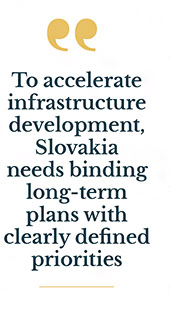 The state budget has faced significant pressure since 2020, but reducing Slovakia’s infrastructure investment deficit will require a combination of funding sources, including EU funds, national resources, and alternative financing mechanisms. Priority should be given to long-discussed projects with strategic importance. These include the completion of the D1 and D3 motorways and the R4 expressway. Decisions should also be made regarding the future north-south motorway connection through central Slovakia. At the same time, project preparation should advance for the completion of the D4 motorway, including the D1/D2 connection through the Karpaty tunnel.
Bridge modernization deserves particular attention. The government plans to implement a large-scale bridge renewal program through PPP projects. Such a model could accelerate implementation and improve efficiency while reducing the burden on public finances. Given the growing number of bridges in poor condition, postponing comprehensive renewal would increase future costs and risks.
In the railway sector, the priority should be the accelerated completion of the modernization of the main east-west railway corridor. This corridor represents the backbone of Slovakia’s rail network and is essential for both domestic and international transport. Delays in modernization risk creating a situation in which parts of the corridor will require further upgrades before the current reconstruction program is fully completed.
Besides financing and continuity, weaknesses remain in project preparation and public procurement procedures. Long-term binding infrastructure plans are largely absent, making it difficult to maintain consistent priorities. Stakeholders in the construction industry expected the new Construction Act to strengthen the position of designers and place greater emphasis on the quality of contractors. Whether these objectives are achieved will become clear only over time.
Designers, particularly those working on transport and engineering infrastructure, continue to face structural disadvantages. While contractors benefit from contractual price indexation that reflects rising labor and material costs, designers and construction supervisors often do not. As a result, professionals working on long-term projects may continue to be compensated according to rates agreed several years earlier despite persistent inflation. This can affect the attractiveness of the profession and the overall quality of project preparation.
To accelerate infrastructure development, Slovakia needs binding long-term plans with clearly defined priorities that remain stable across political cycles. Equally important is the willingness to accelerate the preparation and implementation of strategic projects. Experience has shown that investment in transport, healthcare, water-management, and defense infrastructure can contribute significantly to economic growth, improve public services, and strengthen the country’s long-term competitiveness.
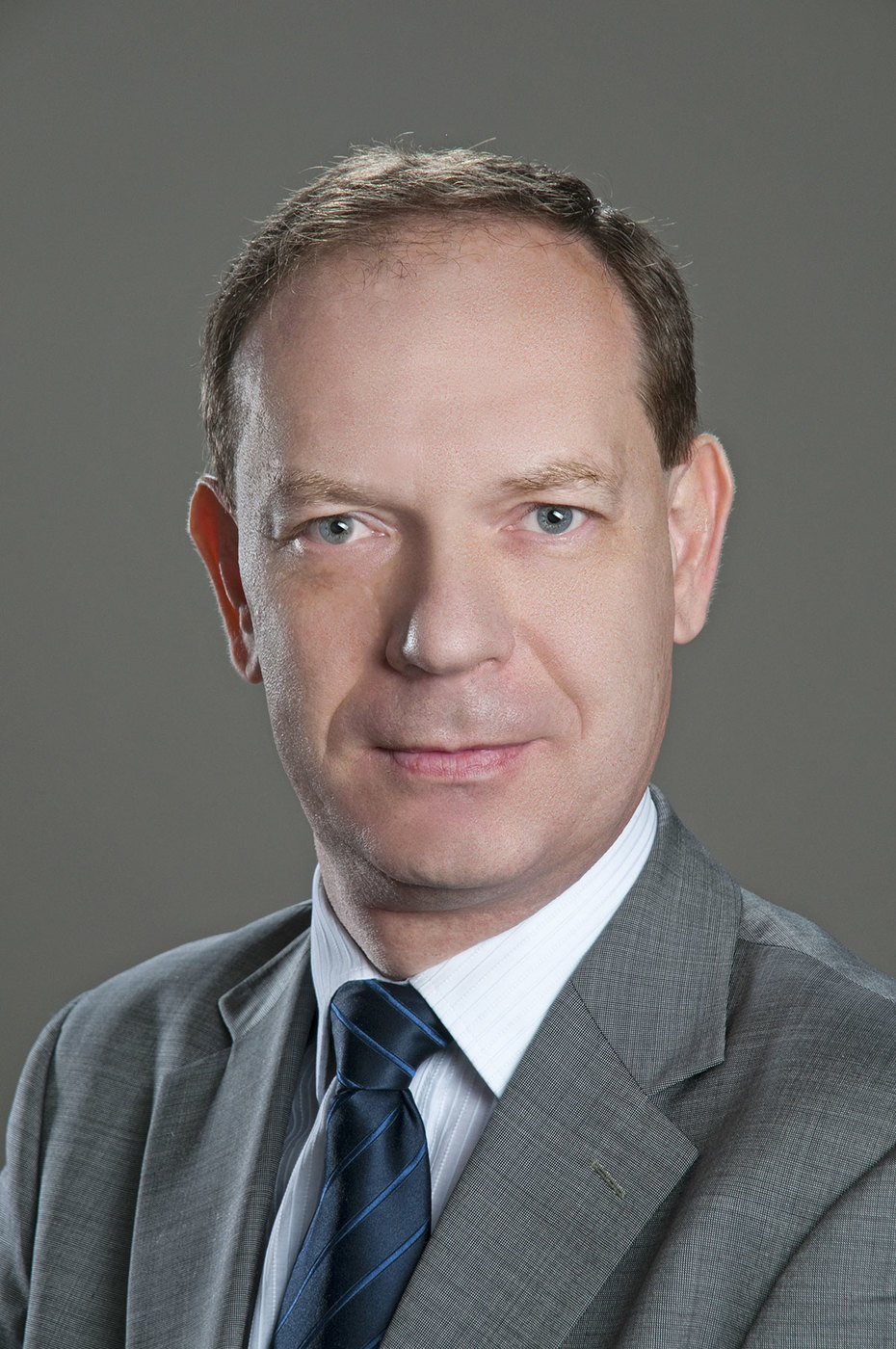
Martin Bakoš, Managing Partner, Amberg Engineering Slovakia
Follow us