When Vladimír Vikor Sr. founded DYNAMIK in 1990, Slovakia’s business environment was only beginning to take shape. Today, DYNAMIK is a construction holding company with more than 35 years of history, hundreds of completed projects, its various divisions and activities in foreign markets. Despite its growth, it remains a family business in which the owners are involved in management and values are not separated from everyday decisions. Vladimír Vikor Jr. today leads the company as a representative of the family’s second generation.
DYNAMIK today operates internationally. When did you realize that this was no longer just about the growth of a construction company, but about transforming the way the company is managed?
It came naturally with the size of the company. When a company is small, many things work through personal contact. The founder knows the people, knows the projects, can intervene quickly, and the culture is passed on directly. But as the company grows, teams, branches, projects and new markets are added. At that point, it is no longer enough for the values to be carried by one person or one family. Other leaders in the company must carry them as well.
This transition was very important for us. My father built the company from scratch. I had the advantage of being able to see how decisions were made, how negotiations with partners took place and how problems were solved. At the same time, I understood that trust cannot be inherited automatically. Being the founder’s son may open doors for you, but you have to earn respect through your own decisions and actions.
That is why I do not see the company’s growth only through numbers. A company grows in a healthy way only when its way of managing evolves along with it. When it can respond quickly without losing the quality of decision-making. When it can expand without losing its identity. Many family businesses struggle, as they grow, with how to preserve their original character. Is that even possible when a company operates in several countries and manages complex projects?
It is possible, but it cannot remain only a feeling. The family character of a company is not about everyone knowing each other by name, although that is pleasant as well. It is mainly a way of thinking. A family business naturally has a longer horizon. It does not make decisions only according to what the next quarter will bring. It thinks about what will remain after it.
For us, it is important to remain a company that stands by its word. In construction, that is no small thing. Projects take a long time, and circumstances, prices, deadlines, technical solutions and investors’ expectations often change. If you agree on rules with someone, you must remain a partner even when the project becomes complicated.
Our family character is also reflected in the fact that, as owners, we remain close to management. We know the projects, the people and the partners. This gives us flexibility. At the same time, we realize that, given the size DYNAMIK has reached today, not everything can depend on the personal presence of the owners. That is why we need a system, processes and leaders who think according to the same values.
Trust is a topic DYNAMIK has communicated for a long time. How can trust be managed in business?
Trust is created in specific situations. When you keep an agreement. When you tell a client even unpleasant information in time. When we do not pretend that a problem does not exist. When a partner knows that, in negotiations, we are not looking for a shortcut, but for a solution that will work.
In construction, trust is also a very practical matter. An investor needs to know that the contractor understands the technical side, the budget, the schedule and the risks. A subcontractor needs to know that negotiations with them will be fair. An employee needs to know that the company does not see them merely as a number in a spreadsheet.
I often say that trust cannot be inherited. It is the result of decisions supported by a system that works every day, including in difficult situations.
More than 90 percent of your projects are carried out for private investors. How has this influenced the way DYNAMIK does business?
A private investor is a very demanding client. They monitor quality, deadlines and budgets, and expect solutions that make sense in practice. At the same time, if they are satisfied, they may return with another project. For us, that is the best feedback.
For this type of client, you have to work transparently. Already in the project preparation phase, we try to identify risks, propose alternatives and look for solutions that make technical and economic sense. It is not only about building according to the brief. You must also bring know-how, experience and the ability to point out things the investor may not see.
That is why value engineering plays an important role for us. In projects, we look for the optimal combination of cost, quality and time. Sometimes the decisive factors are details in logistics, materials or technological procedures. Taken together, these details often determine the success of the project.
What role do digitalization and new technologies play in construction today?
A major one, but I would never overestimate technology as a standalone solution. Digitalization helps us make more accurate decisions. BIM models, cloud tools, data analytics and gradually also artificial intelligence can improve project preparation, coordination and control.
Important decisions today are made much earlier than the start of construction. If an error is only discovered on site, it is more expensive. That is why we try to think ahead as much as possible. To model, coordinate trades, assess risks and work with data.
At the same time, technology remains a tool. The result still depends on people. Data can show you a problem, but someone has to evaluate it correctly. Artificial intelligence can speed up analysis, but responsibility for the decision remains with the manager.
Your story is also a story of generational transition. What was the most difficult part of the transition from the first to the second generation?
The most difficult thing is to separate emotions from rules. A family business is specific because family and business overlap within it. That is a great strength, but it can also be a risk. If roles, responsibilities and the decision-making process are not clearly defined, sensitive topics may be postponed.
That is why I see succession as a long-term and managed process. Not as a moment when a father and son shake hands and everything changes. It was also important for us to discuss who has which role, who decides on what, and how potential conflicts will be resolved. Work on a family constitution also helped us. It is a document that defines the relationship between the family and the company. At first glance, it may sound formal, but in practice it helps name things in advance. And that is very healthy in family business.
You were also involved in the creation of non-profit organization Family Business Network Slovakia. Why did you feel the need to create such a platform?
Family business can close you off in your own world, where you feel that issues such as succession, family relationships, decision-making rules and the involvement of the next generation are problems only you are dealing with. Then you sit down with other family businesses and realize they are dealing with very similar things.
The Family Business Network is important to me precisely because it brings together our experiences with those of global companies that have a history spanning more than a century, and in some cases, as long as three centuries. In Slovakia, we have many strong family businesses that were established after 1989 and are now entering the next phase. But around the world there are companies that are already in the fifth or sixth generation. When you speak with them, you see that longevity cannot be built only on goodwill. It requires rules, respect and the ability to learn. These conversations are a great source of inspiration for me.
For DYNAMIK, it is also a natural extension of a topic we believe in. Family businesses are important for the economy and for the stability of the country. They are at home here, they know the environment, they employ people, support regions and usually do not think short term. DYNAMIK is expanding abroad. How can a company grow beyond its domestic market while maintaining control over quality?
Expansion must be managed. You have to know why you want to enter foreign markets, who you are going there with, and what type of project makes sense. For us, nearby markets are the most natural, especially where we can use our experience in industrial, logistics, residential or commercial construction.
Partnerships are very important. You often enter a foreign market through a client who has had a good experience with you at home and wants to continue elsewhere. For us, that is the healthiest form of expansion. It is based on trust you have already demonstrated.
At the same time, we must be careful that growth does not outrun the company’s capacities. Every new market means new legislation, culture, partners, risks and a new way of working. That is why it is important for us to grow internationally, but not chaotically. We want to expand in a way that allows us to maintain both quality and the character of the company.
What should foreign investors or AmCham members know about Slovak family businesses?
That they are often more stable and more professional than they may appear at first glance. Many Slovak family businesses were established in a very demanding environment. Without capital, without a tradition of entrepreneurship, without ready-made manuals. They had to build everything themselves.
That is precisely why they have a high degree of resilience. They can survive crises because they think long term. They have a relationship with the country, the region and the people they employ. They are not anonymous entities that move elsewhere at the first sign of a problem.
At the same time, they must professionalize. If a family business wants to grow and become a partner for major investors, it needs processes, transparency, quality management and the ability to work according to international standards.
What is DYNAMIK’s vision for the coming years?
We have defined the DYNAMIK2035 strategy. Its essence is simple: we want to grow internationally while preserving the character of a family business. We want to innovate, look for better solutions and hold on to the values that brought us here.
For me, it is important that DYNAMIK is not only bigger. I want it to be stronger. That means a stronger team, better processes, more stable partnerships and the ability to manage more complex projects. Growth without character has little value for a family business.
If a company is to survive for further generations, it must be economically successful. But at the same time, it must know why it exists and what principles guide its decisions. In our case, the answer remains the same: we want to build things we can stand behind. In front of clients, in front of the people in the company and in front of our own family.
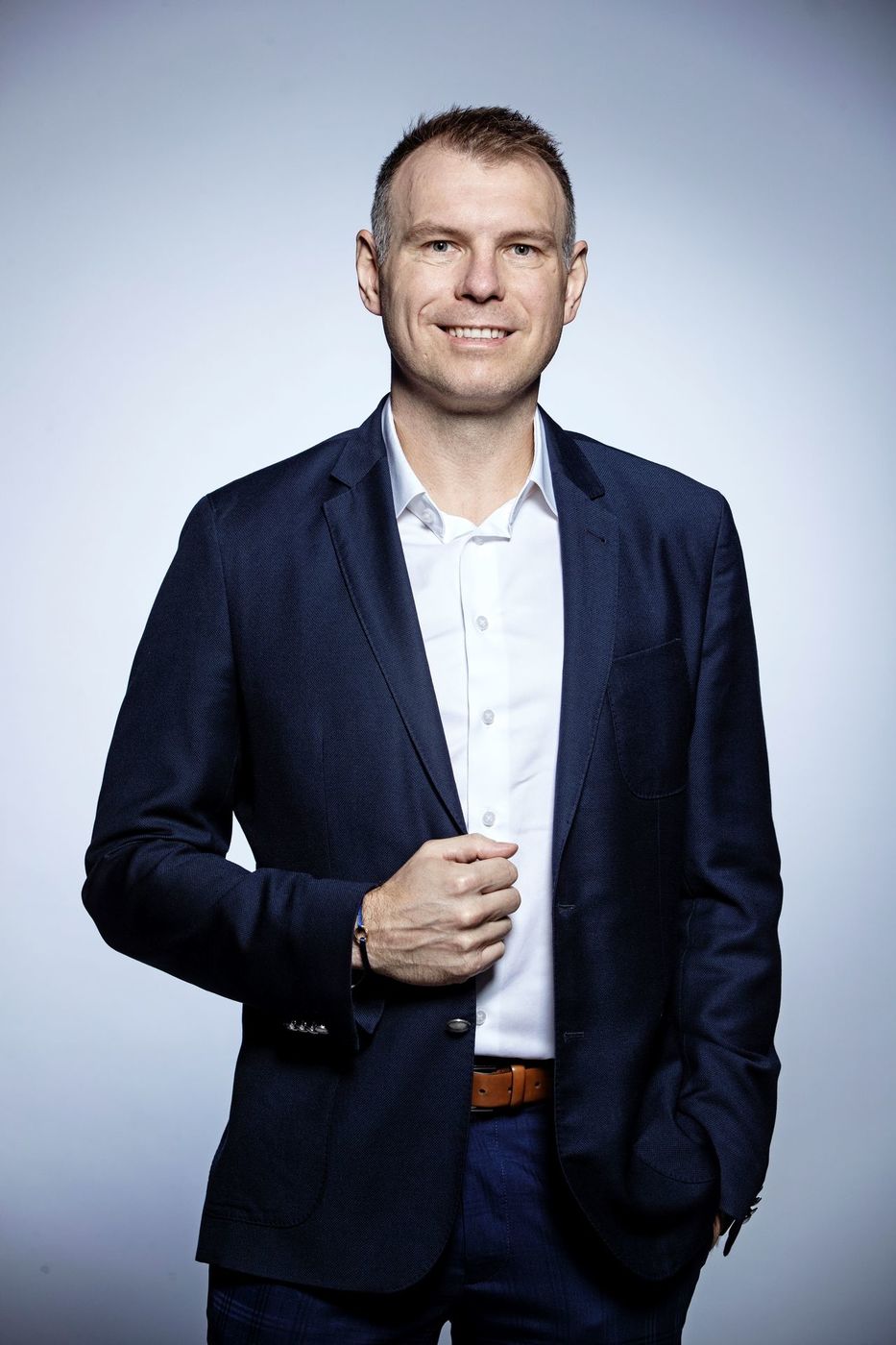
Vladimír Vikor Jr., CEO, DYNAMIK HOLDING
Follow us