
What do you currently perceive as the biggest challenge or the biggest opportunity in your life?
(MŠ) I currently see the biggest challenge and opportunity in the same topic: how we use technology, especially artificial intelligence, in a meaningful and responsible way.
From a business perspective, AI is changing how companies operate, how people work and how value is created. For Syntax, this is a great opportunity because we are part of the global IT ecosystem and at the same time strongly rooted in Košice and Eastern Slovakia. I believe our region has enormous potential, talented people, strong universities, a growing technology community and a very good quality of life. The challenge is to turn this potential into real opportunities for people, companies and the wider community.
On a personal level, the challenge is to stay balanced and present. I am a managing director, but I am also a husband, father of two children, and someone who is actively involved in education, sport and community projects. The opportunity is to connect these worlds in a meaningful way. To show that business success and social responsibility do not have to be separate stories.
(DB) I see the implementation of AI into everyday work life as both a major challenge and a huge opportunity. It is important to adapt and move with the times in order to stay competitive. At the same time, AI gives us the opportunity to significantly increase productivity and change the way we work for the better.
What achievement from the past 12 months are you proud of the most?
(MŠ) I am proud of several things, but if I had to choose one, it would be the continued growth and impact of Syntax in Košice and the region. We have grown significantly as an organization, strengthened our local presence and continued to build a company that is not only delivering global IT services, but also contributing to the local community.
I am especially proud that our story is not only about numbers. It is also about people, students, partnerships and long-term contribution. Over the past year, we continued to support education, cooperate with schools and universities, and bring practical technology topics closer to young people. One of the most meaningful activities for me was our AI Day at a primary school in Košice, where we connected business, education, teachers, parents and students around a topic that will shape the future of today’s children.
For me, this is exactly the kind of impact a modern company should have, to be successful in business, but at the same time useful for the society in which it operates.
(DB) A few months ago, I got the opportunity to expand my role beyond operations and become more involved in the engineering side of the business. It gave me the chance to see what is happening “in the kitchen,” which has been very interesting and enriching for me. I can better understand how our product is built, be part of that process, and continuously learn new things. What is the favorite part of your day and why?
(MŠ) One of my favorite parts of the day is the moment when I complete my daily exercise routine. It gives me a sense of discipline, energy and control over the day. Since January 2025, I have been exercising every single day for at least 30 minutes. It started as a personal challenge, but it has become much more than that. It is now part of my identity and a reminder that consistency is stronger than motivation.
The second favorite part of my day is the evening with my family. After a demanding day full of meetings and decisions, it is important for me to slow down, talk to my wife and children, and be present at home. That balance is not always easy, but it is extremely important.
(DB) Probably our afternoon coffee breaks. Not because I am avoiding work, but because it is one of the few moments when colleagues from across the company naturally meet in an informal environment. Even though conversations often start privately, they very quickly turn into discussions about ideas, projects, and challenges that normally would not come up during regular meetings.
What regular habit or routine has had the biggest positive impact on your life?
(MŠ) Definitely my daily exercise routine. I call this personal project IterVitae, which for me means a journey of continuous personal development. The rule is very simple: every day, without exception, at least 30 minutes of physical activity.
What surprised me most is that the biggest impact was not only physical. Of course, I lost weight, improved my fitness and feel much better. But the deeper impact is mental. It taught me discipline, patience and consistency. It also changed the way I look at goals. Big changes do not usually come from one dramatic decision. They come from small repeated actions, done consistently over a long period of time.
This routine has influenced my work as well. It reminds me every day that leadership is not only about strategy and decisions, but also about personal discipline, energy and example.
(DB) Regular exercise and the ability to consciously disconnect from work. Over time, I realized that long-term performance is not about constantly working more, but about maintaining a healthy work-life balance and keeping both physical and mental energy in good condition.
What advice would you give to your 20-something-year old self?
(MŠ) I would tell myself: “Be patient, but do not be passive.” When you are young, you often want results immediately. You want to prove yourself, move fast and show that you are capable. That is natural. But real growth takes time. Reputation, trust, expertise and leadership are built step by step.
At the same time, I would tell my younger self not to wait for perfect conditions. Take responsibility earlier. Say yes to challenges that are slightly bigger than you feel ready for. Many of the most important moments in my career came when I stepped outside my comfort zone.
And finally, I would say: “Invest in relationships. Skills are important, but trust, integrity and the ability to work with people are what truly define long-term success.”
(DB) Do not be afraid to make big decisions earlier - whether it is taking on responsibility, making major life changes, or stepping outside your comfort zone. Most of the important changes in my life eventually led to something better.
What are the parts of your work that still excite you and give you motivation?
(MŠ) What still excites me most is building something meaningful with people. I was the first employee of Syntax in Košice and seeing how the company has grown over the years is a very special feeling. It is not only a professional story. It is also a personal one.
I am motivated by the combination of global responsibility and local impact. On one hand, we are part of an international company delivering complex IT services to global customers. On the other hand, we are creating jobs in Košice, developing young talent, cooperating with universities and supporting community projects.
I also enjoy working with people who want to grow. Whether they are students, young professionals, managers or community partners, it gives me energy when I can help create an environment where people gain confidence, take responsibility and move forward.
(DB) Definitely the people I work with. I am surrounded by young, smart, and motivated colleagues with different perspectives and ideas. They constantly push me forward and help me see problems from angles I would not normally consider. For me, the biggest motivation is creating an environment where talented people can grow, create, and continue developing themselves.
If you had to make a career switch, in what other profession can you imagine yourself?
(MŠ) I can imagine myself working much more deeply in education or community development. Not necessarily as a traditional teacher, but as someone who connects business, schools, universities and young people.
Education has been close to me for many years. I believe that if we want to change the future of a region, we have to start with children, students and teachers. I enjoy creating projects where young people can experience technology, business or leadership in a practical way.
Another area would probably be sport management, especially connected with youth development. Sport teaches discipline, teamwork, resilience and respect. Values that are also essential in business and life. (DB) Probably in a more technical or creative field connected to design, architecture, or 3D modeling. I have always enjoyed the process of creating and designing things and then seeing those ideas become something real. That is something that still fascinates me today.
Can you name three sources you have recently learned from or have inspired you the most?
(MŠ) The first source is people. Especially conversations with students, teachers, colleagues and community leaders in Košice. I learn a lot from real discussions with people who are trying to improve something around them.
The second source is the world of AI and technology. I follow how artificial intelligence is changing work, education and society. It is a topic that requires constant learning, because the development is extremely fast and the implications are very broad.
The third source is leadership education and reflection. My executive leadership studies at McGill had a strong impact on the way I think about leadership, responsibility and long-term value. I also continue to learn from books, podcasts and discussions with leaders from different industries and cultures.
(DB) Recently, I was deeply inspired by a young Slovak couple who most likely became the first people in the world to complete the Great Himalaya Trail together. It is considered one of the toughest and wildest treks in the world. What inspired me the most was the fact that they achieved it with very limited preparation and almost no previous experience with similar trails. It is a strong reminder that determination and mindset are often more important than perfect conditions, large investments, or years of experience.
What is your biggest fear for the generation of today’s children? What about the biggest hope?
(MŠ) My biggest fear is that today’s children will grow up in a world with too much noise and too little depth. Social media, constant comparison, short attention spans and now also artificial intelligence can make it harder for children to build patience, critical thinking and real human relationships.
I am also concerned that children may learn how to use technology before they learn how to understand it. Access to information is no longer the problem. The real challenge is the ability to think critically, ask the right questions, understand context and distinguish quality from manipulation.
My biggest hope is that this generation can become the most capable and open generation we have ever seen. They have access to knowledge, tools and opportunities that previous generations could not even imagine. If we help them build strong values, emotional intelligence, responsibility and critical thinking, they can use technology not only to be more successful, but also to make society better. That is why I believe education is one of the most important responsibilities we have today. Not only as parents, but also as business leaders and members of the community.
(DB) My biggest concern is that future generations may lose the ability to build real human relationships in a world dominated by constant digital pressure and online communication. I am also concerned about the ongoing destruction of nature and the environment. I sometimes worry that future generations may never experience the world and nature the way previous generations once could.
At the same time, my biggest hope is that today’s children will have access to knowledge, opportunities, and technologies that previous generations could only dream about.
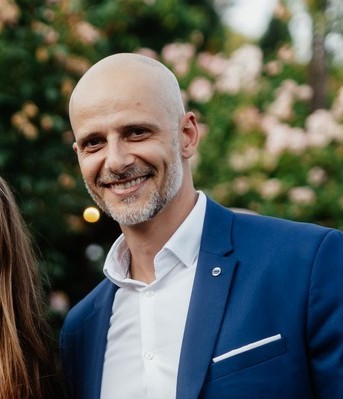
Milan Števkov, Managing Director, Syntax Systems Slovakia
Danko Bočev, Branch Manager, Eleveo
Author
- Danko Bočev
- Eleveo a.s., organizačná zložka Slovensko
- Branch Manager
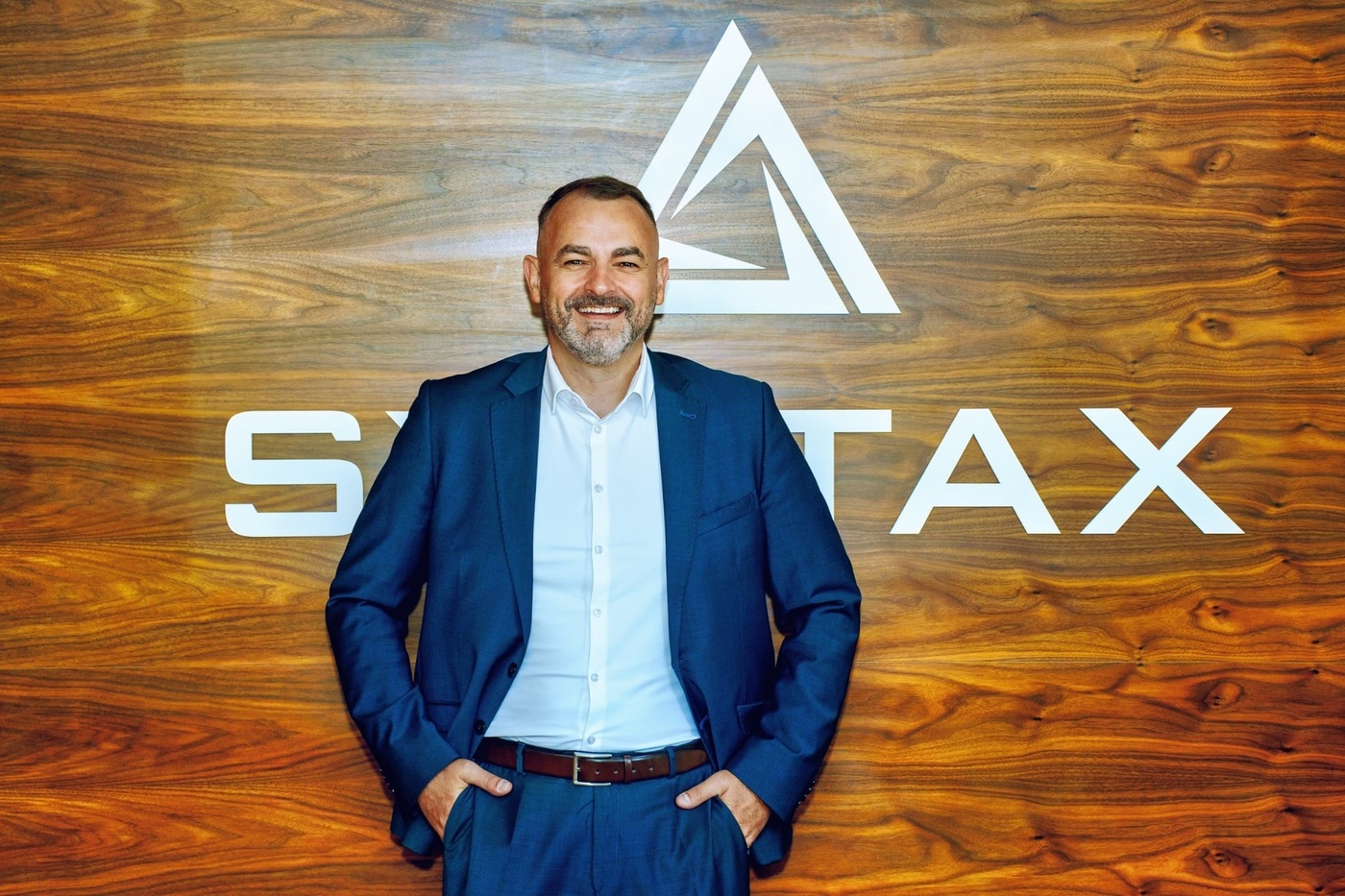
- Milan Števkov
- Syntax Systems s.r.o.
- Managing Director
Follow us